Traffic congestion and road safety are significant concerns for cities across the globe. With populations growing and the number of vehicles on the road steadily increasing, traditional methods of managing traffic often fall short. In recent years, however, artificial intelligence (AI) has begun to play a crucial role in addressing these challenges.
From reducing traffic congestion to enhancing road safety, AI-powered traffic management systems are transforming how to navigate cities. This post explores how AI is revolutionizing traffic management and making roads safer and more efficient.
As towns get bigger, traffic congestion is one of the problems that never goes away. Traditional traffic control systems, which depend on fixed traffic lights and people watching the traffic by hand, often have trouble adapting to changes in traffic patterns that happen in real-time. AI can solve these issues because it can look at huge amounts of data and make choices right away.
Traffic cameras, sensors, GPS, and even social media feeds are just some of the places where AI systems can get information. Then, complex algorithms are used to handle this data in a way that can predict traffic flow, find accidents, and change traffic signals to make traffic flow better. Because of this, AI can help ease traffic, make roads safer, and make transportation networks work better.
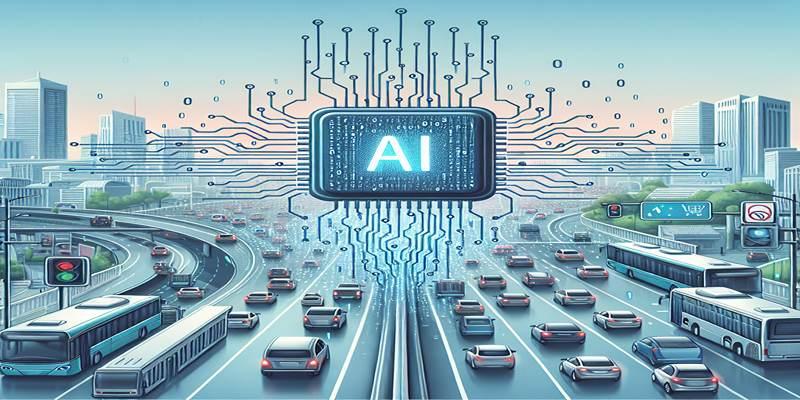
One of the most significant advantages of AI in traffic management is its ability to reduce congestion. Here's how AI-powered systems are helping:
AI systems continuously monitor traffic conditions through sensors, cameras, and GPS data. By analyzing this data in real time, AI can adjust traffic signals to optimize traffic flow. For example, AI can change the timing of traffic lights based on the volume of traffic, ensuring that cars can pass through intersections more efficiently.
AI can tell when traffic will be bad before it does. Artificial intelligence (AI) systems can find patterns and guess where traffic jams will happen by looking at old data. It lets the government take proactive steps, like changing the times of traffic lights or sending cars to less crowded places.
AI can also help drivers avoid congested routes by providing real-time navigation updates. For instance, AI-powered apps like Google Maps and Waze can analyze traffic data from millions of users and suggest the fastest route. It reduces the overall traffic volume on major roads, preventing further congestion.
Safety is a top priority in traffic management, and AI plays a significant role in reducing accidents and making roads safer. AI enhances road safety in several ways:
AI can detect accidents or incidents in real time using cameras and sensors placed along roads. Once an incident is identified, AI can alert traffic management centers and emergency responders immediately. This quick response helps reduce the time it takes to clear accidents, preventing further delays and additional accidents.
AI-based traffic signal systems are designed to improve the flow of traffic at busy intersections. These systems can detect the presence of vehicles and adjust the signal timing accordingly, ensuring that cars spend less time waiting at red lights. Moreover, AI can prioritize traffic based on real-time conditions, such as giving more green time to emergency vehicles, buses, or pedestrians.
Autonomous vehicles powered by AI are becoming a critical part of the transportation ecosystem. These vehicles are designed to make driving safer by eliminating human error, which is responsible for a significant number of accidents. By using AI to detect obstacles, anticipate hazards, and make decisions in real time, autonomous vehicles can help reduce accidents and improve road safety.
The integration of AI in traffic management offers several key benefits:
While AI holds immense potential for transforming traffic management, there are several challenges and considerations to keep in mind:
AI systems rely heavily on data, and there are concerns about the collection and use of personal data, such as vehicle locations. Ensuring that data is collected ethically and that privacy is protected is a crucial issue that must be addressed.

The cost of implementing AI-powered traffic systems can be high, particularly in large cities. While the long-term benefits may justify the investment, initial costs may pose a barrier for smaller municipalities.
Integrating AI systems into existing traffic management infrastructure can be complex. It requires collaboration between various stakeholders, including local governments, technology providers, and transportation agencies.
AI has the potential to transform traffic management systems, reducing congestion, improving road safety, and making transportation more efficient. By leveraging real-time data, predictive analytics, and smart routing, AI can create smarter, safer, and more sustainable cities. While there are challenges in implementing AI systems, the benefits far outweigh the drawbacks. As technology continues to advance, AI will play an increasingly important role in shaping the future of transportation and urban mobility.
AI helps predict property values and real estate trends, enabling smarter decisions for buyers, sellers, and investors.
Explore the top 7 machine learning tools for beginners in 2025. Search for hands-on learning and experience-friendly platforms

Discover OpenHands, an open-source AI software development platform offering machine learning, NLP, and computer vision tools

AI is the ability of a machine to perform different tasks, including learning, making decisions, and solving problems like humans

AI is transforming healthcare careers, changing how doctors and professionals work. Learn more.

Improve visibility, confidence, and user involvement by optimizing your AI tool listing with reviews, images, and keywords
Find more than 20+ top AI solutions for productivity that simplify jobs, automate processes, and improve professional efficiency

AI helps smart buildings save energy, lower costs, and occupant comfort through automation and intelligent insights.

Learn how to optimize memory usage with NumPy arrays to improve performance and reduce RAM consumption in Python programming.

Discover how AI chatbots for customer service help companies improve their response times and support efficiency worldwide

AI is redefining healthcare jobs and medical professions. Explore its impact on the industry.

AI is transforming water and electricity utility services by enhancing efficiency and reducing costs globally.